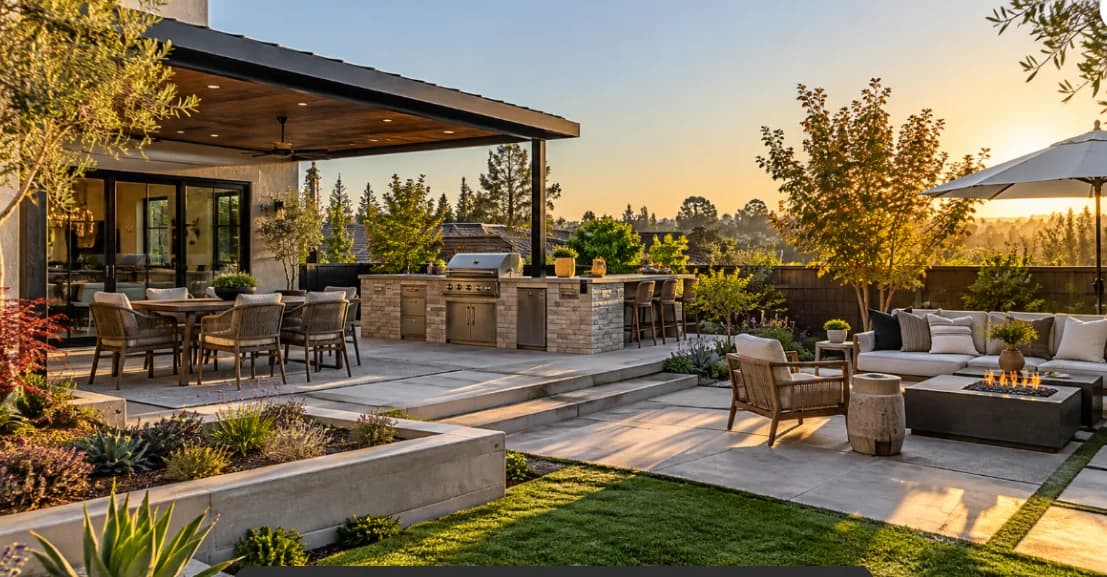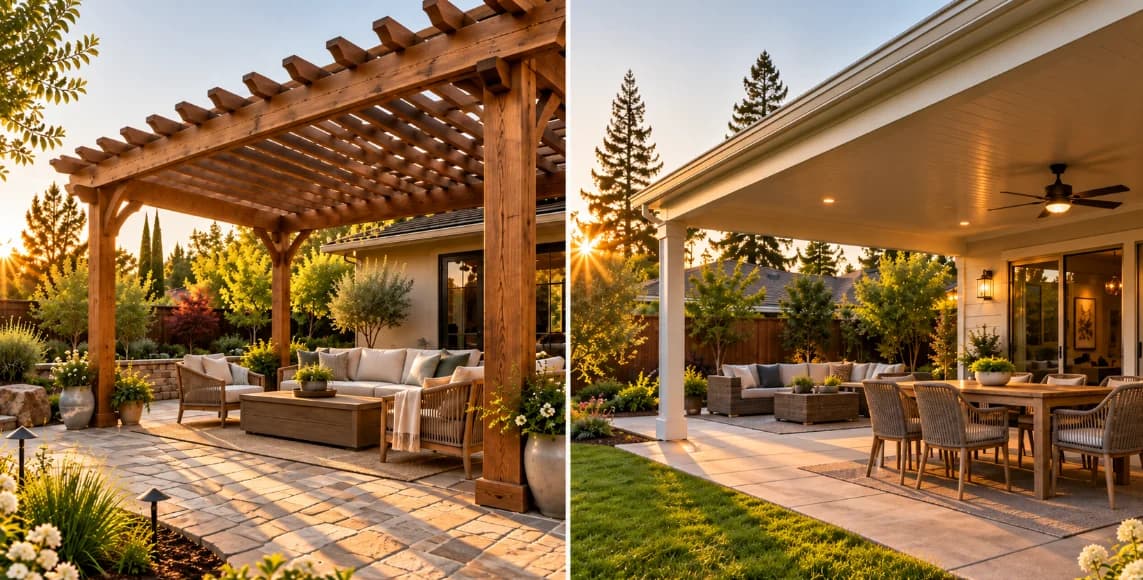
If you’re comparing a pergola vs patio cover for a backyard in Rocklin, Roseville, Lincoln, or the surrounding Loomis area, start with how much shade and weather protection you actually want. A pergola keeps the space open and allows some sunlight through, while a solid patio cover creates much more consistent shade and protection overhead. Neither is automatically the better choice. The right structure depends on where it will sit, how you use the patio, and how exposed that part of your yard gets during the hottest part of the day.
At Holt Landscape, we design and build both custom pergolas and patio covers as part of larger backyard and outdoor living projects. Based in Loomis and serving nearby communities including Rocklin, Roseville, and Lincoln, we know how important shade can be in this part of Placer County. A patio that feels comfortable on a spring morning can become a completely different space on a hot summer afternoon.
Pergola vs Patio Cover: What’s the Main Difference?
The biggest difference is overhead coverage.
A traditional pergola uses an open or slatted roof. Depending on the spacing and orientation of those slats, it creates partial shade while still allowing sunlight and air through. The structure gives a patio definition without making it feel completely enclosed.
A patio cover typically has a solid roof. That gives you substantially more shade and better protection from rain. It often feels closer to an outdoor extension of the house, especially when it’s attached directly to the home.
Holt Landscape builds both attached and freestanding structures, so the decision doesn’t have to depend entirely on whether your patio sits against the house.
We also work with wood, vinyl, and aluminum options, along with features such as retractable shade and lighting. That gives homeowners room to adjust the amount of coverage and the overall look without treating every pergola or patio cover the same way.

Choose a Pergola When You Still Want Sunlight
Pergolas work well when the patio already gets some natural shade or when you want relief from direct sun without putting a full roof over the space.
That open feeling is one of their main advantages. You still see plenty of sky, breezes move through easily, and the structure adds some architectural definition to an otherwise open patio.
A pergola may make sense over a lounge area, a secondary seating space, or part of a larger backyard where you don’t need complete protection from the weather.
Placement makes a big difference. A pergola that works beautifully on one side of a house could provide less useful shade somewhere else because the sun moves across each property differently. Before deciding on the layout, pay attention to where direct afternoon sun hits the yard during the warmer months.
You should also think about what sits underneath the structure. If you’re putting outdoor furniture there and don’t mind occasional exposure to rain or direct sunlight, partial coverage may be enough. If you’re trying to protect a dining space or another heavily used area, you may prefer something more substantial.

Choose a Patio Cover When Consistent Shade Is the Priority
For homeowners in Rocklin, Roseville, Lincoln, and Loomis, the appeal of a patio cover is straightforward: dependable shade.
A solid roof blocks direct overhead sunlight and creates a patio that tends to be easier to use during hot weather. It also gives you better coverage when it rains.
That can make a patio cover a practical choice over an outdoor dining area, frequently used seating space, or another part of the yard where you expect to spend long stretches of time.
Attached patio covers can also make the transition from the house to the backyard feel more connected. Walk out the back door and you’re immediately in a covered outdoor area rather than crossing an exposed section of patio first.
For homeowners planning a larger outdoor living space, that relationship between the house, patio and surrounding landscape matters. Shade structures work best as part of the overall layout rather than as an isolated feature added wherever there happens to be room.
Think About What You’ll Put Under It
How you plan to furnish the space can make the decision easier.
A few lounge chairs and a coffee table don’t require the same setup as a full outdoor dining area. Likewise, a quiet seating area away from the house has different needs from a patio that handles regular family meals and weekend gatherings.
Measure the furniture you expect to use before settling on the size of the structure. Leave enough room to pull chairs out, walk around a table and move between the patio and the rest of the yard comfortably.
If you’re planning an outdoor kitchen nearby, look at the entire entertaining area at once. Cooking, dining, seating and shade should work together rather than competing for space.
A larger structure isn’t always necessary. Good placement often matters more than simply covering the maximum amount of patio.
Consider the Direction of the Afternoon Sun
Hot Placer County summers make sun exposure one of the most practical considerations in the design.
Spend some time looking at your yard in the afternoon, especially between the house and the area where you want the structure. Note where the strongest sunlight lands and how long that exposure lasts.
Trees, neighboring structures, rooflines and the orientation of your home can all change the amount of shade a patio receives.
This is especially relevant with a pergola because the roof remains partially open. The angle and spacing of the overhead members influence how much sun reaches the area below.
With a solid patio cover, overhead exposure is less of an issue, although the sun can still enter from the sides as its angle changes.
The best placement comes from looking at the actual property rather than choosing a structure from a photo and trying to make the backyard fit it.
Don’t Forget Lighting
Shade structures tend to become natural gathering areas, which means they often get used after sunset too.
Planning lighting at the same time as the pergola or patio cover keeps the finished space cleaner and more functional. Holt Landscape offers lighting add-ons for these structures as well as custom landscape lighting for outdoor living areas, pathways and landscape accents.
Think about what you need the lighting to accomplish.
Dining areas need enough illumination to see comfortably around the table. Lounge spaces usually need softer light. Paths between the covered patio, house and other parts of the yard should stay visible after dark.
The lighting doesn’t need to overpower the landscape. It should make the outdoor space comfortable to use once natural light fades.
Attached or Freestanding?
Another decision is whether the structure should connect to the house.
An attached patio cover often makes sense directly outside a back door or over a patio that functions as an extension of the home’s living space. It creates an easy transition between indoors and outdoors.
A freestanding pergola or patio cover gives you more flexibility elsewhere on the property. It might sit beside a pool, over a separate lounge area or farther into a large backyard where the best view or natural surroundings aren’t directly against the house.
Holt Landscape builds both attached and freestanding options, so the layout can follow the property rather than forcing every structure against the home’s exterior.
Larger properties around Loomis and Lincoln may have several possible locations for an outdoor structure, while more compact lots in Rocklin or Roseville may require a more deliberate use of the available footprint. Looking at the full backyard layout first can help determine where the structure will be most useful.
Check Permit Requirements Early
Permit requirements depend on the type and size of the structure as well as the city or jurisdiction where you live, so this belongs near the beginning of the planning process rather than at the end.
Requirements can differ between Loomis, Rocklin, Roseville, Lincoln, and unincorporated Placer County. An attached patio cover may also be treated differently from a freestanding structure, depending on the project.
Our team handles permitting as part of the planning and construction process for Holt Landscape projects.
Which One Fits Your Backyard Better?
Choose based on the space you want to create.
A pergola is usually the stronger fit if you like an open-air feeling, want partial shade and prefer a structure that still lets sunlight filter into the patio.
A patio cover makes more sense when dependable shade and overhead weather protection matter most, especially over a frequently used dining or seating area.
There are also ways to adjust the design between those two ends of the spectrum. Material choices, retractable shade and the size and placement of the structure all influence how the finished area feels.
The rest of the backyard should factor into the decision too. Patios, landscaping, lighting, fire features, seating and outdoor kitchens all affect where a shade structure belongs and how large it needs to be.
At Holt Landscape, we plan landscape construction and outdoor living projects around the property and the way homeowners expect to use it. If you’re considering a pergola or patio cover in Loomis, Rocklin, Roseville, Lincoln, or a nearby Placer County community, contact our team to discuss the space and compare the options for your backyard.
A few details usually make the choice much clearer: where the afternoon sun hits, how much weather protection you want, what you’ll place underneath the structure and whether the patio connects directly to the house. Start there before deciding between a pergola and a patio cover.